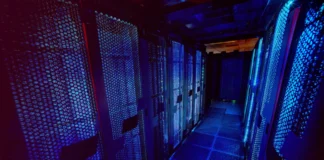
Cloud infrastructure provider CoreWeave has announced plans to build a $6 billion AI-focused data center in Pennsylvania, marking one of the most significant single-site private investments in the region’s growing digital economy. The facility is aimed at powering next-generation AI workloads and supporting the company’s long-term goal of building scalable, high-performance compute environments tailored for artificial intelligence and machine learning applications.
Scaling infrastructure for AI growth
The upcoming facility will start with 100 megawatts (MW) of power, with provisions to scale up to 300 MW. Designed to meet the rising demand for AI computing capacity, the data center will generate approximately 600 construction jobs and offer 70 full-time roles across technical and operational domains. This move aligns with CoreWeave’s recent strategy to expand its GPU-rich infrastructure footprint across the United States.
Also read: Meta Bets Billions on Superintelligence Data Centers
This announcement follows CoreWeave’s $9 billion acquisition agreement with Core Scientific, a crypto mining firm that owns significant data center and power assets. The acquisition was aimed at accelerating CoreWeave’s ability to serve enterprise AI customers by tapping into Core Scientific’s existing capacity and infrastructure.
Strengthening U.S. AI infrastructure
The Pennsylvania data center will contribute to the national push toward enhancing domestic AI capabilities. With energy demands surging due to the rise of AI-driven models and services, cloud providers are doubling down on clean and stable energy-backed sites across the country.
CoreWeave’s announcement comes shortly after Amazon Web Services pledged $20 billion to expand its data center presence in the state. Collectively, these developments position Pennsylvania as a key AI infrastructure hub in the eastern U.S.
CoreWeave CEO Michael Intrator emphasized the urgency of building scalable cloud systems purpose-built for AI. The new facility is expected to significantly lower latency for East Coast enterprise customers, enhance access to high-density GPU clusters, and further cement the company’s leadership in AI cloud services.